In-progressReactTypeScriptNode.js+6 more
Session
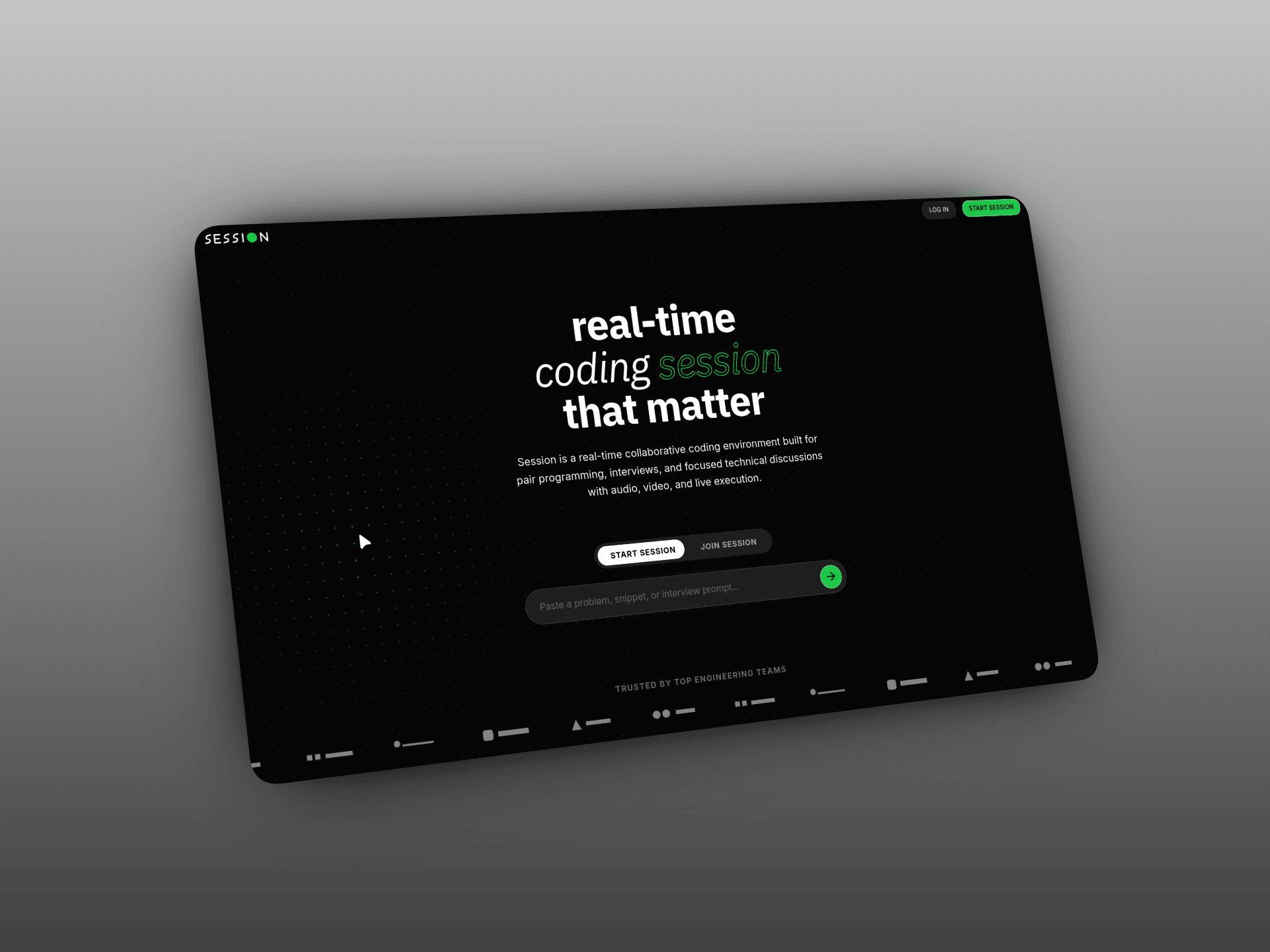
A real-time collaborative coding environment built for pair programming, technical interviews, and focused coding discussions — with live code sync, AI assistance, and more.
Timeline
Role
Status
In-progressTechnology Stack
React
TypeScript
Node.js
Express
WebSocket
Yjs
Monaco Editor
Tailwind CSS
Google Gemini
Overview
Session is a real-time collaborative coding environment designed to enhance pair programming, technical interviews, and synchronous coding discussions. It provides a seamless experience for developers to write, edit, and execute code together in real-time.

Key Features
🖥 Real-Time Collaborative Editor
Session uses Yjs and WebSockets to enable conflict-free, real-time editing.
- Live Code Synchronization: Changes are reflected instantly across all connected clients.
- Monaco Editor: Leveraging the power of VS Code's editor engine for a professional coding experience.
- Multi-language Support: JavaScript, TypeScript, Python, Java, C++, Go, HTML, CSS, and more.
- Cursor & Selection Awareness: See exactly where your peers are editing.
🤖 AI-Powered Assistance
Integrated AI tools to boost productivity and learning.
- Integrated AI Chat: Get contextual help, explanations, and code suggestions.
- AI Session Bootstrapping: Automatically generate problem statements and starter code.
- Powered by Google Gemini: Utilizing state-of-the-art AI models for intelligent assistance.
🎨 Modern UI/UX
A premium, developer-focused interface.
- Glassmorphism Design: Sleek, modern aesthetics with translucent panels.
- Dark Mode First: Optimized for comfortable coding in low-light environments.
- Smooth Animations: powered by Framer Motion for a fluid feel.
Tech Stack
Frontend
- React 19: Utilizing the latest React features for a responsive UI.
- Vite: Fast development server and optimized build tooling.
- Tailwind CSS v4: Utility-first styling for consistency and speed.
- Framer Motion: For fluid animations and transitions.
Backend
- Node.js & Express: Robust and scalable backend server.
- WebSocket (ws): Real-time bilateral communication channel.
- Google GenAI SDK: Integration with Google's Gemini models.
Architecture
The system follows a layered architecture to ensure scalability and maintainability.
Request Flow:
  Routes → Controllers → Services → Database/External APIs
- Modular Routing: Organized by feature domain.
- Centralized Error Handling: Consistent error responses and logging.
- Service Layer Pattern: Business logic separated from HTTP transport.